
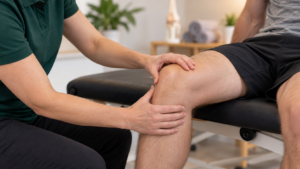
 Have you noticed pain in your knee when walking upstairs? Perhaps you feel a sharp discomfort at the front of your knee, an ache around your kneecap, or stiffness when climbing the stairs at home or work.
Knee pain on stairs is a common problem that can affect people of different ages and activity levels. It may develop gradually, follow an increase in exercise, or occur after an injury.
At Naturally Heaven Therapy in Benton, Newcastle upon Tyne, we understand how frustrating knee pain can be when it starts affecting everyday activities.
In this guide, we’ll explain some common causes of knee pain when climbing stairs, what you can do to manage it, and when a physiotherapy assessment may be helpful.
Why Does My Knee Hurt When I Walk Upstairs?
Walking upstairs places different demands on your knees compared with walking on flat ground.
When climbing stairs, your quadriceps muscles at the front of your thighs work to straighten your knees and lift your body upwards. The knee joint also bends under load, increasing the forces passing through the joint and around the kneecap.
If the tissues around your knee are irritated, sensitive or struggling with a recent increase in activity, climbing stairs may become uncomfortable.
However, knee pain on stairs doesn’t always mean there is damage to the joint. Pain can have several contributing factors, and identifying the cause may require a physical assessment.
5 Common Causes of Knee Pain When Climbing Stairs
1. Patellofemoral Pain (Pain Around the Kneecap)
Patellofemoral pain is a common cause of discomfort at the front of the knee or around the kneecap.
It can be particularly noticeable during activities that involve bending the knee under load, including:
- Walking upstairs or downstairs
- Squatting
- Running
- Getting up from a chair
- Sitting with bent knees for prolonged periods
Patellofemoral pain can be associated with changes in training load, muscle strength and how the knee responds to activity.
How physiotherapy may help: An assessment can identify contributing factors and guide a gradual strengthening and activity-management programme.
2. Knee Osteoarthritis
Osteoarthritis is a condition involving changes within the joint that may contribute to pain, stiffness and reduced movement.
Symptoms can include:
- Knee pain during weight-bearing activities
- Stiffness after rest
- Difficulty with stairs
- Occasional swelling
- Reduced confidence in movement
Osteoarthritis becomes more common with age, but not every painful knee has arthritis.
How physiotherapy may help: Individualised exercise, strength training and education can help improve function and support the management of osteoarthritis symptoms.
3. Patellar Tendinopathy
The patellar tendon connects the kneecap to the shinbone and helps transmit force when the knee straightens.
Patellar tendinopathy can cause pain just below the kneecap, particularly during activities such as jumping, running, squatting and climbing stairs.
It is often associated with repeated loading or a sudden increase in activity.
How physiotherapy may help: A progressive strengthening programme and appropriate management of activity levels can help improve the tendon’s ability to tolerate load.
4. Meniscus Problems
The menisci are cartilage structures inside the knee that help distribute load through the joint.
Meniscus-related symptoms may occur after a twisting injury or develop alongside age-related changes.
Possible symptoms include joint-line pain, swelling, catching sensations or difficulty fully straightening the knee.
However, these symptoms are not specific to a meniscus injury, and not all meniscal changes cause pain.
How physiotherapy may help: Depending on the problem, exercise-based rehabilitation can improve strength, mobility and everyday function. Some injuries require further medical assessment.
5. Muscle Weakness or a Sudden Increase in Activity
Sometimes knee pain develops when the demands placed on the knee increase faster than the body is prepared for.
For example, you may notice discomfort after:
- Starting a new running programme
- Increasing your walking distance
- Returning to the gym after a break
- Climbing more stairs than usual
- Increasing the intensity of exercise
Strength and control around the hips, thighs and calves can influence how comfortably you manage these activities.
How physiotherapy may help: A tailored rehabilitation plan can help you gradually build strength and tolerance for everyday movements.
Why Does My Knee Hurt More Going Downstairs?
Some people experience more knee pain when descending stairs than when climbing them.
Walking downstairs requires the quadriceps muscles to control your body as you lower yourself onto the next step. This can place considerable demand on the knee joint and the structures around the kneecap.
Pain going downstairs can occur with patellofemoral pain, osteoarthritis and other knee conditions.
The location of the pain, any associated symptoms and your medical history are important when identifying the possible cause.
What Can I Do to Relieve Knee Pain on Stairs?
If your knee pain is mild and has not followed a significant injury, several strategies may help.
1. Temporarily Reduce Aggravating Activities
You don’t necessarily need to stop moving completely.
Consider reducing activities that repeatedly worsen your symptoms, then gradually reintroduce them as your knee becomes more comfortable.
2. Build Strength Gradually
Strengthening the muscles around your knees and hips can help improve your ability to manage stairs.
Depending on your symptoms, exercises such as supported sit-to-stands, gentle knee extensions or modified step-ups may be appropriate.
The right exercises and difficulty level depend on the cause of your pain. Stop or modify an exercise if it causes significant or worsening symptoms.
3. Use the Handrail
Using a handrail can provide additional support and reduce the demand on a painful knee.
Taking stairs more slowly and using a step-to pattern temporarily may also make them easier to manage.
4. Manage Your Activity Levels
If your symptoms began after increasing exercise, consider whether you have changed your training intensity, distance or frequency too quickly.
A gradual return to activity may be more comfortable than repeatedly pushing through significant pain.
5. Seek Advice if the Pain Persists
If knee pain continues, returns regularly or limits your normal activities, a professional assessment can help clarify what may be contributing to your symptoms.
When Should You See a Physiotherapist for Knee Pain?
Consider booking a physiotherapy assessment if:
- Your knee pain keeps returning.
- Walking upstairs or downstairs is becoming difficult.
- You have reduced your usual exercise because of knee discomfort.
- Your knee feels stiff or weak.
- Your symptoms are not improving with sensible activity adjustments.
- You want guidance on returning to sport or exercise.
A physiotherapist can assess your movement, strength, symptoms and activity demands before recommending an appropriate management plan.
Important: Seek urgent medical advice if you cannot bear weight, your knee is severely swollen or deformed after an injury, or you develop a hot, red, very painful joint with fever or feel unwell. Significant locking or sudden inability to straighten the knee also warrants prompt assessment.
How Can Physiotherapy Help Knee Pain?
Physiotherapy focuses on understanding the factors contributing to your symptoms and improving your ability to move comfortably.
Depending on your assessment, treatment may include:
- A personalised strengthening programme
- Advice on managing painful activities
- Mobility and movement exercises
- Guidance on returning to walking, running or sport
- Education about pain and recovery
- Hands-on treatment where clinically appropriate
The aim is not simply to provide temporary symptom relief, but to help you build the strength, confidence and movement capacity needed for everyday life.
Results and recovery times vary depending on the underlying problem.
Knee Pain Physiotherapy in Newcastle upon Tyne
If knee pain is making stairs, walking or exercise difficult, Naturally Heaven Therapy offers a local option for people seeking physiotherapy in Benton and the surrounding Newcastle upon Tyne area.
Whether your symptoms started after exercise, developed gradually or are affecting your daily routine, a physiotherapy assessment can help identify appropriate next steps.
We welcome enquiries from people in Benton, Killingworth, Longbenton, Gosforth and surrounding areas of Tyne and Wear.
Book a physiotherapy appointment with Naturally Heaven Therapy to discuss your knee pain and explore suitable treatment options.
Book Your Physiotherapy Appointment
Frequently Asked Questions
Is knee pain when walking upstairs a sign of arthritis?
Not necessarily. Although osteoarthritis can cause pain on stairs, other conditions such as patellofemoral pain, tendon problems and injuries can produce similar symptoms. A professional assessment may help distinguish between them.
Should I keep walking if my knee hurts?
Gentle movement is often beneficial, but it depends on the cause and severity of your symptoms. If walking causes significant pain, swelling or worsening function, seek professional advice rather than repeatedly pushing through it.
Can weak thigh muscles cause knee pain on stairs?
Reduced muscle strength can contribute to difficulty managing stairs, although knee pain usually has several possible contributing factors. Strengthening may be helpful as part of a personalised rehabilitation programme.
Will knee pain go away on its own?
Some mild episodes improve with time and appropriate activity adjustments. Persistent, worsening or recurrent symptoms may benefit from assessment.
Can physiotherapy help me walk upstairs without pain?
Physiotherapy may help improve strength, movement and activity tolerance, depending on the underlying cause. Improvement cannot be guaranteed, but an individualised programme can support recovery and function.